
Styling The Row Handbags for Work and Beyond
The Row has earned its name on restraint.You won’t find no logos shouting from the leather, no of-the-moment flourishes, just simple silhouettes and materials that hold up over time. For anyone building a work-ready closet around a couple of investment pieces, understanding how the row bags really work on a daily basis matters more than following fads. This article breaks down the functional details: which silhouettes work for the workday, which ones flex into nights out and trips, and how to weigh the cost before you buy.
The Row Bags’ Rise as an Office Staple
Minimalism sells because it endures. The brand’s fashion philosophy has long revolved on durability rather than newness, and that shows up in handbag design. A bag stripped of decoration doesn’t go stale the way a logo-covered piece does after a year or two. It’s worth weighing when a bag can run several thousand dollars and needs to prove its worth in rotation for a decade, not a season.
Structurally, these bags tend toward simplicity, which allows them to style across different settings. Take neither a round tote nor a structured top-handle—neither competes with an outfit as a hardware-laden bag could. This is part of why stylists and editors keep returning to the brand when dressing clients for work: the bag becomes a quiet anchor rather than a centerpiece that needs matching.
The leather itself is another factor. The Row uses weighty, often veg-tanned or semi-aniline hides that develop patina over years of handling. That aging process is part of the appeal for people who want a bag to look better, not worse, after five years of everyday wear. It’s a different value proposition than quick-cycle luxury goods, and it accounts for why resale prices on the best row bags tend to hold up reasonably well compared to logo-heavy rivals.
Building a Work Wardrobe Around One Bag
Not many people require five bags for office life—a single bag that carries a laptop, holds its shape through a commute, and looks right with tailored pieces and simpler daywear as well is all that’s needed. The Margaux, one of the brand’s most recognized silhouettes, tends to be the first mentioned in this conversation because of its range of the row fashion vintage tote bags sizes and structured-but-soft slouch.
The options for buying the row margaux bag remain pretty limited, and this is no accident. The Row distributes its pieces through its standalone stores and site, plus a select number of sanctioned luxury retailers like Net-a-Porter, Mytheresa, and select department stores like Bergdorf Goodman and Nordstrom for certain seasons. Because the brand doesn’t flood distribution channels, availability varies unpredictably, and sought-after sizes in neutral shades sell out in short order, particularly around fall restocks.
When it comes to office use, the mid-size Margaux (commonly labeled Margaux 15 in inches) rests comfortably under the arm or on a shoulder and fits a 13-inch laptop with a folder or two. Roomier variants, closer to 17 inches, serve more like a soft tote for those who carry more paperwork or a change of shoes. Deciding between the two ultimately hinges on what your commute demands rather than aesthetics alone, since both share the same design language.
Styling Notes: Desk to Dinner
The transition from office to evening is where a well-chosen bag proves its worth. A tailored the row tote bag in black or dark brown comes across as entirely fitting next to a blazer and trousers during the day. Replace the blazer with a slip dress post-6pm and the same bag still feels at home — therein lies the value of buying into a design philosophy built on neutral, adaptable shapes rather than fleeting trend details.
Texture plays a subtle but important role. A grained leather tote feels appropriately durable for commuting, while a smoother, softer nappa version of a similar silhouette skews more elegant for evening. Should you be assembling a two-bag work wardrobe, pairing one structured piece with one slouchier shoulder bag covers most situations without redundancy.
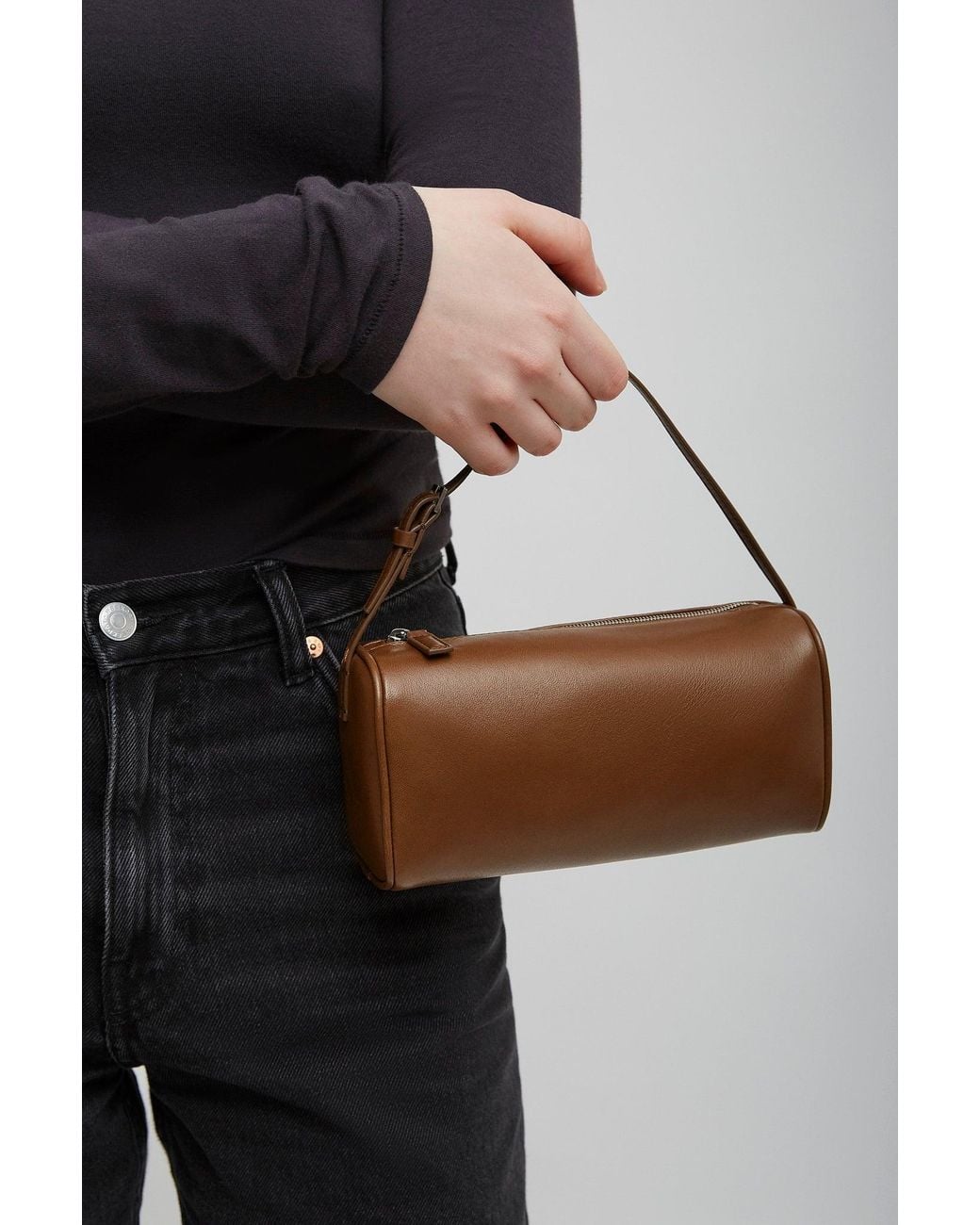
People tend to underestimate how much color choice matters. Black and dark chocolate remain the most adaptable for office wear, but a taupe or bone shade shows up gorgeously against both winter tailoring and summer linen, extending a bag’s usefulness across the full calendar year rather than just cold-weather months. This adaptability is part of why these tones repeatedly appear atop the best row bags among stylists building capsule wardrobes.
A Look at Popular The Row Silhouettes
Not every bag in the lineup suits every purpose. Below is a useful comparison of four widely talked-about shapes among the top row bags, focused on how they perform for work versus other daily use.
| Bag Style | Recommended Use | Laptop Capacity | Shape and Build |
|---|---|---|---|
| Margaux 15 | Perfect for routine work-related travel | Fits up to the 13-inch laptop | Soft slouch with an supportive base |
| Margaux 17 | Busier workdays, travel days | Roomy enough for up to a 15-inch computer | Its bigger footprint while staying soft-sided |
| N/S Tote, Park | Ideal for running errands | Can take a smaller laptop as long as it is sleeved | Open top, distinctly casual |
| Sofia’s Bag | Evening and dinner meetings | Not designed for laptops | Neat build with a top-carried handle |
Before investing in a first the row bag, this kind of comparison proves worthwhile, given that the variations between styles remain understated in photos alone yet carry real weight once everyday wear comes into play.
If your days move between client meetings and commuting, a Margaux will prove more useful than a smaller top-handle style that isn’t built to carry a laptop.
Purchasing the Savvy Way: Markdowns, Resell, and Timing
The Row doesn’t mark down heavily or frequently, which is part of the label’s pricing discipline. That being said, a row sale now and then appears through authorized retailers rather than its own storefront — clearance events at season’s close at Net-a-Porter or other such sites can feature colorways from earlier collections or less standard sizes at reduced prices. These sale periods are usually brief and stock is scarce, so moving fast is more important than banking on a larger price cut which isn’t guaranteed to arrive.
Resale platforms like The RealReal and Vestiaire Collective are worth checking for anyone priced out of retail, particularly for discontinued colors or older Margaux seasons. Because the leather ages well and the design doesn’t telegraph a specific year, a gently used bag from a few seasons back often looks nearly identical to current stock, which isn’t true of more logo-driven brands.
Unlike mass-market bags, The Row’s pieces require extra scrutiny, because the brand steers clear of conspicuous branding that would render fakes obvious. Sourcing from established resale platforms with dedicated authentication experts, or directly through authorized retailers, cuts down such exposure by a wide margin. Taking this precaution is worth it seeing how much of the value is bound up in materials and construction quality rather than easily-copied logos.
How Real Maintenance Genuinely Extends the Bag’s Lifespan
Untreated or lightly treated leathers, which many row handbags use, show marks more readily than more heavily finished hides. In exchange, you get the beautiful patina these bags develop, but it implies keeping the bag away from water and sunlight when the bag sits idle. Keeping the bag in a dust bag and away from radiators extends the bag’s life more than most people expect.
So the leather stays soft instead of drying out and splitting at high-stress areas such as handles and corners, condition the leather about twice a year or so, adjusted for your climate and usage habits.
This becomes especially important in the case of the softer, less-structured totes, because in these pieces the hide itself does most of the work in holding the bag’s shape.
Switching off between two bags, if budget allows, gives the hide a chance to recuperate and recover its shape between uses. Daily heavy use without rotation is the fastest way to wear out handles and corners on any soft-structured bag, The Row’s included. For anyone approaching it as a long-term wardrobe investment as opposed to a one-off seasonal buy, the habit of rotating proves worthwhile in how it looks daily and what it fetches on resale.
Final Thoughts on Building a Row-Based Work Wardrobe
A well-chosen bag from The Row isn’t about following trends — it’s about buying into a design language that doesn’t need updating every year. Whether the entry point is a Margaux for the daily commute or a smaller top-handle for client dinners, the common thread across the row bags overview is steadiness: fine materials, quiet design, and shapes that work as hard in year five as they did on day one. Few handbags at any price point share that rare quality, which is why this brand is repeatedly mentioned whenever creating a truly enduring wardrobe comes up in conversation.
